PU FRP MATERIAL GUIDE

Why Polyurethane FRP?

What Is FRP Material?

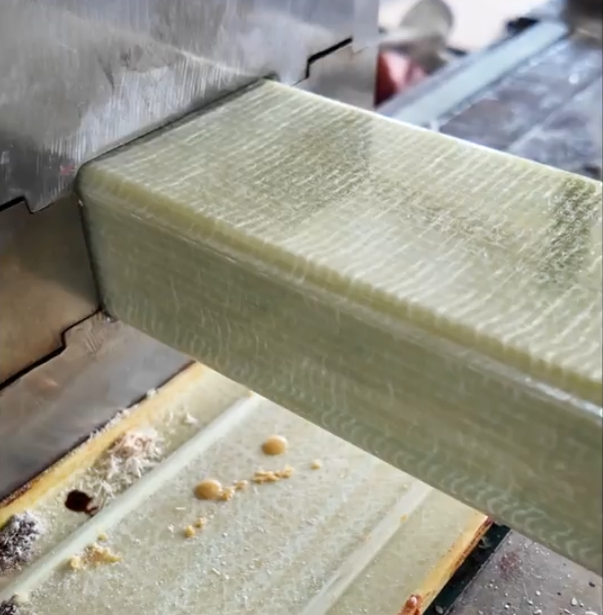
Fiber-reinforced polymer products are made by combining reinforcing fibers with a polymer resin matrix. Glass fiber is the main reinforcement used in our FRP profiles and composite components. The fibers provide strength and stiffness, while the resin binds the reinforcement, transfers loads and helps determine toughness, weathering, flame retardancy and long-term performance. Glass fiber is the primary reinforcement used in our FRP profiles and composite components. The fibers provide strength and stiffness, while the resin binds the reinforcement, transfers loads and influences toughness, weathering, flame retardancy and processing behavior.
Polyurethane FRP is a composite material that uses a polyurethane resin system as the polymer matrix. It is not one standardized material grade. Different PU formulations are selected according to product geometry, manufacturing process, service environment and required performance.

Glass Fiber and Polymer Resin

Glass fibers provide the primary strength and stiffness of the composite. The polyurethane resin wets and binds the fibers, transfers loads between them and helps protect the reinforcement from the service environment. The final performance of an FRP product depends on the resin system, reinforcing fibers, fiber structure, additives and manufacturing process—not on the resin alone.

WHAT DETERMINES FRP PERFORMANCE?

The final performance of an FRP product depends on the complete combination of reinforcement, resin, fiber architecture, additives and manufacturing process.

Reinforcing Fiber

Reinforcing fibers provide the primary strength and stiffness of an FRP product. Glass fiber is the main reinforcement used in our composite profiles and components.

Resin System

The resin wets and binds the fibers, transfers loads between them, and protects the reinforcement from the service environment.

We primarily use polyurethane and epoxy resin systems, selected to meet specific requirements for toughness, weather resistance, and processing performance.

Fiber Architecture

Fiber direction and reinforcement structure determine the longitudinal, transverse and other directional properties of the finished composite product.

Functional Additives

Functional additives can influence flame performance, UV resistance, weathering, color, surface quality and manufacturing behavior.

Manufacturing Process

The manufacturing process influences fiber orientation, surface quality, dimensional control, production volume and overall manufacturing cost.

How Our FRP Products Are Manufactured
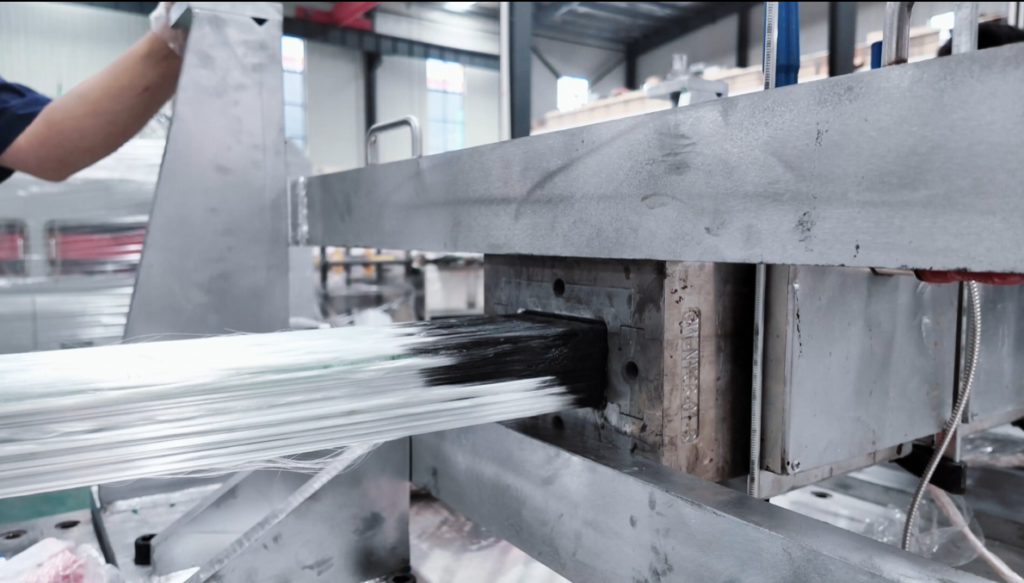
Different FRP products require different manufacturing processes. The suitable process depends on the product geometry, fiber orientation, performance requirements and expected production volume.

Pultrusion

Pultrusion is a continuous manufacturing process used to produce FRP profiles with a constant cross-section. Glass fibers are impregnated with resin, guided through a forming system and pulled through a heated die where the composite is cured into its final shape.

FILAMENT WINDING

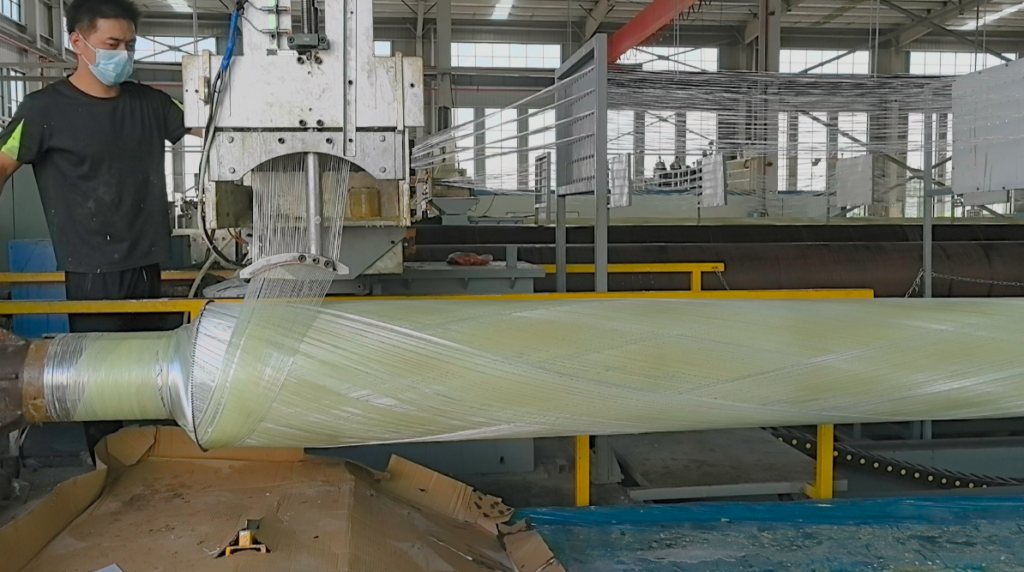
Ideal for pipes, tanks, pressure vessels, and other cylindrical components, filament winding is an automated process that applies resin-impregnated continuous fibers over a rotating mandrel in controlled patterns. The process delivers high fiber content, consistent quality, and excellent strength in the required directions.

Vacuum Infusion

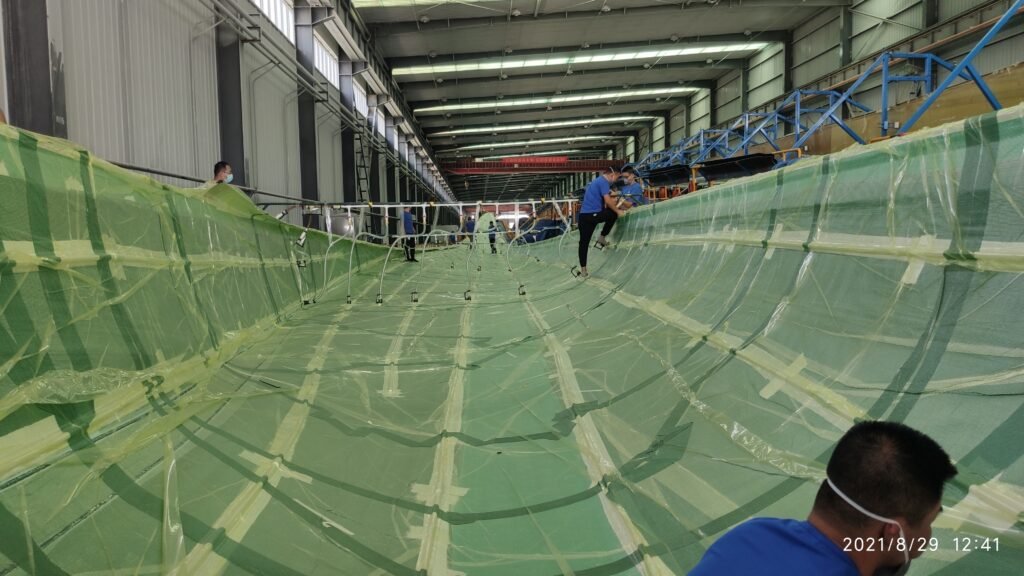
Well suited for large, lightweight composite components, vacuum infusion uses negative pressure to draw liquid resin through dry fiber reinforcements placed inside a sealed vacuum bag. The process provides uniform resin distribution, low void content, and good control over part thickness and quality.

Polyurethane Resin Systems for FRP Products

Polyurethane is the primary resin system used in our FRP products. Combined with glass-fiber reinforcement, PU resin can support strength, toughness, impact resistance and efficient composite manufacturing.

我是一个标题

你的文字在这里...选择文本的任何部分来访问格式工具栏。
WHY POLYURETHANE?

Why Use Polyurethane Resin for FRP Composites?

Polyurethane resin systems can combine processing efficiency, strong fiber bonding, toughness and structural performance in glass-fiber reinforced composite products.

Key Benefits

Faster Processing 
Highly reactive PU systems can support rapid curing and higher pultrusion line speeds, helping improve production efficiency and shorten cycle time.
Strong Fiber Bonding
Good fiber wet-out and adhesion to compatible glass reinforcement support effective load transfer, consistent impregnation and composite integrity.
Toughness & Impact Resistance
PU matrices can provide high toughness for products exposed to impact, vibration, handling damage and sudden loads.
Design Flexibility
The combination of toughness, fiber interaction and processing performance supports high-fiber-content, thin-wall and complex profile designs.
Damage Tolerance Under Dynamic Loads
 The toughness of structural PU systems can help FRP components tolerate vibration, repeated loading and progressive damage in demanding applications.
Improved Secondary Processing 
The toughness of PU composites can improve tolerance to drilling, cutting and mechanical fastening, helping reduce cracking and edge damage.
Tailorable Performance
PU resin systems can be formulated around specific requirements for rigidity, toughness, cure speed, hydrolytic stability and processing compatibility
Styrene-Free Processing
PU composite systems do not require styrene as a reactive diluent, while selected formulations and closed processing methods can support low-emission manufacturing.